The collecting history of this female portrait, which stubbornly resists historical identification, has a clear beginning in the early 18th century Florence: it can be found at Palazzo Pitti among the assets of the Grand Prince of Tuscany, Ferdinando de’ Medici (inventory of 1702-1710). In 1713, it was moved to the Medici villa of Poggio a Caiano, in 1773 to the Uffizi in the Sala dell’Ermafrodito, and then to the Tribuna. However, it cannot be definitively traced in the earlier inventories of 1666 (inheritance of Cardinal Carlo de’ Medici) and 1631 (inheritance of Vittoria della Rovere) because the descriptions of the portrayed figure in both are too generic to identify it. Since 1927, it has been on permanent deposit at the Galleria Nazionale delle Marche. The proposal for its original provenance from Urbino and the identification of Giovanna di Montefeltro (1463-1513), the daughter of Federico, wife of Giovanni della Rovere, and mother of the future Duke Francesco Maria I, is attributed to Sangiorgi. However, this suggestion seems impractical, either because such a crucial historical figure might have still been recognizable by the authors of the Rovere inventories or because, at the time of the painting’s execution, Giovanna would have been over forty years old (and had six pregnancies), which is too old for the woman depicted.
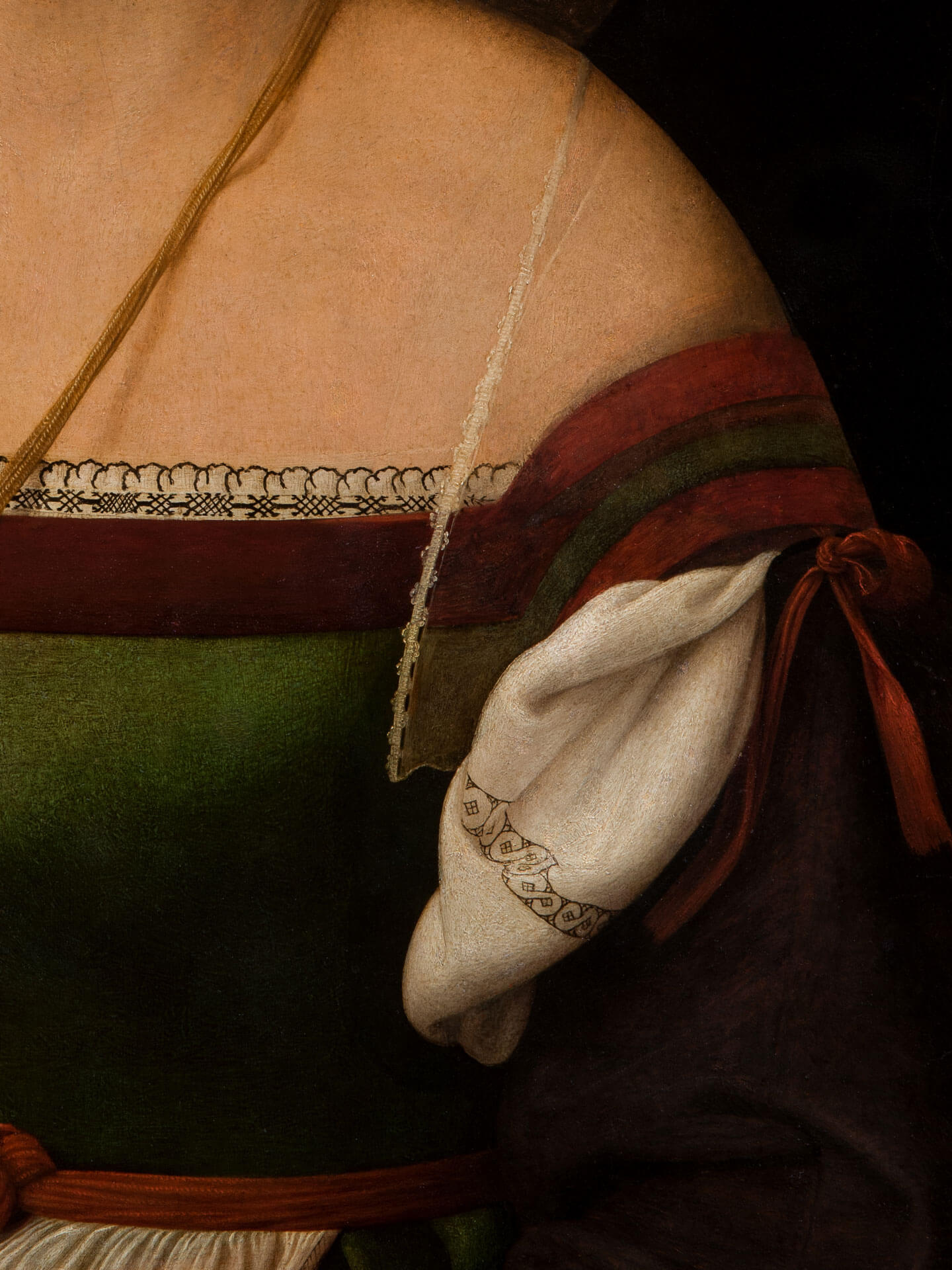
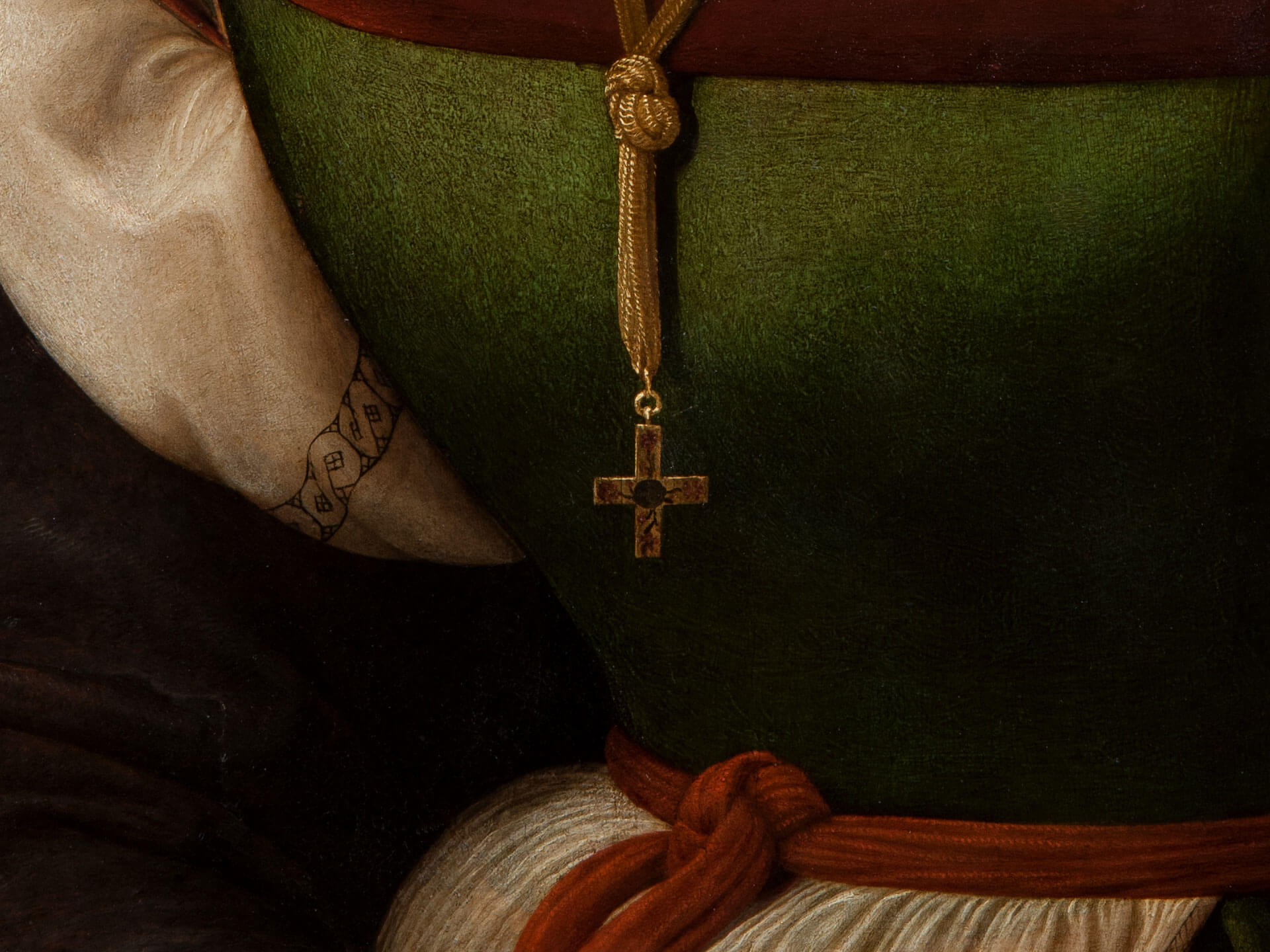
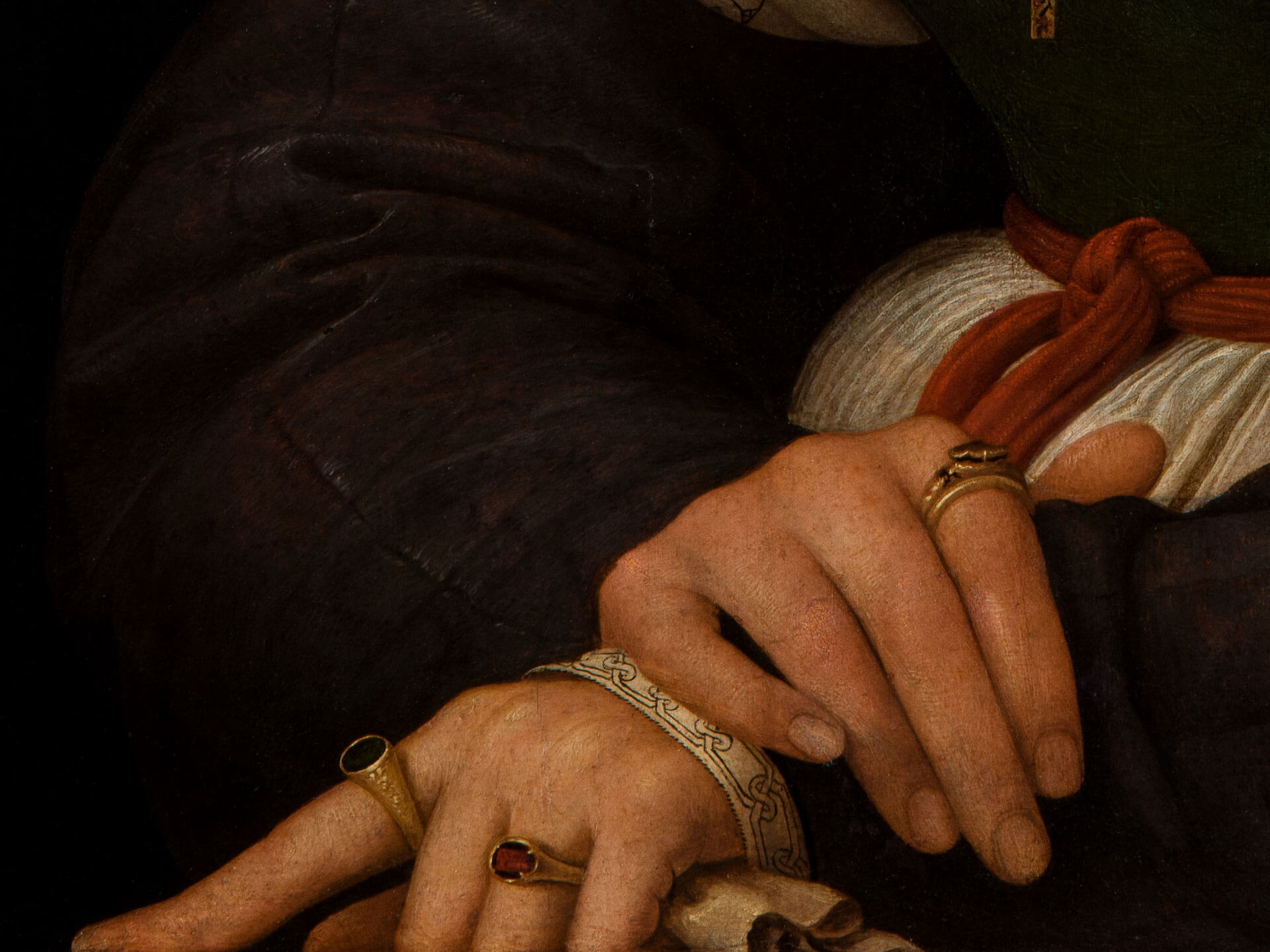
In-depth diagnostic investigations conducted in 2014 by the Opificio delle Pietre Dure in Florence have allowed for the dismissal of some hypotheses about the ‘painful’ genesis of the painting, which was believed to have been created in two separate moments about five years apart. The presence of numerous pentimenti in the style of the clothing and in the facial features had strengthened the hypothesis that it had been retouched following a tragic event, also suggested by the green color of the dress. Recent studies on Florentine fashion from the early 16th century have shifted the focus to the bourgeois milieu through which this commission may have reached Raphael. The understated jewelry adorning the chest and hands of the Muta, as well as the choice of precious silk veils framing her head and shoulders, the glove (or handkerchief) held between her hands, and the richness of fabric colors, all reflect the rigid social codes imposed by the sumptuary laws of Florence at the time and speak to the woman’s wealth and her role in the family economy (consider the apron cinching her waist).
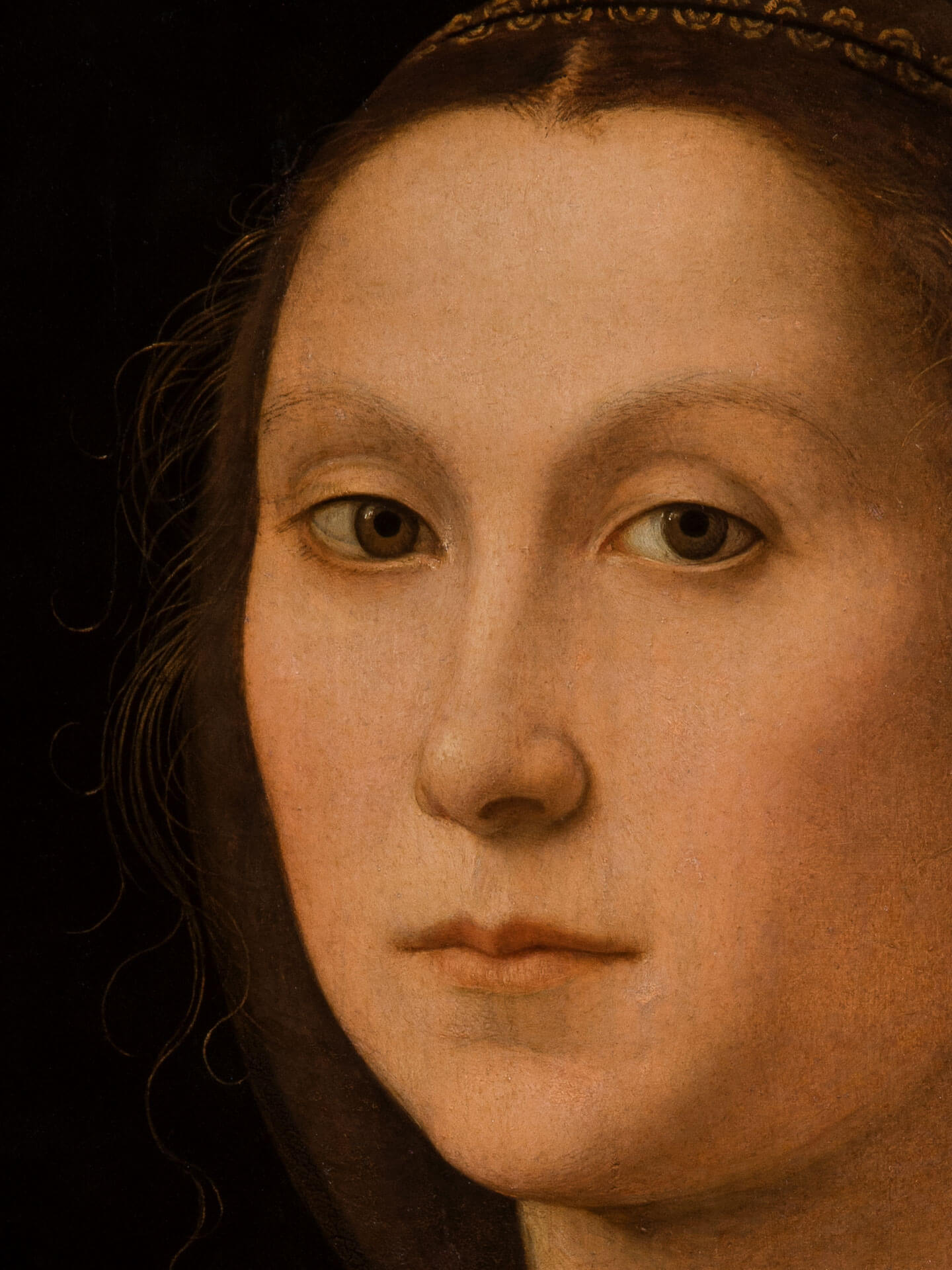
In the sharp and dignified features of the face, with an intense gaze enhanced by tightly closed lips, the brush investigates physical details with a meticulousness that goes beyond the warm and rational ‘Urbino’ light. The underlying drawing of the painting shows how Raphael sketchily outlined the eyes, nose, and lips, while the study of the pose, varying in the height and opening of the shoulders, as well as the hand positions, was more challenging for him. The painter, also grappling with the difficult three-quarter view, here delves into the portrait style of Leonardo (from Ginevra de’ Benci to the Mona Lisa), in continuity with what was experienced in the Maddalena Strozzi Doni of the Uffizi and especially in the Gravida of Palazzo Pitti. The debt to Northern European portraiture is equally strong, both in the treatment of the hands, overlapping at the lower edge of the painting (pay attention to the index finger of the left hand, which shows something beyond the panel), and in the use of the dark background, through which the complex volume of the figure is isolated and the virtuosic rendering of fabrics is highlighted.
Giovanni Russo
Author: Raffaello Sanzio
Storage location: Urbino, Galleria Nazionale delle Marche
Place of originUncertain
INV COD:1990 DE 237
Dimensions: 65,2 x 48 cm
Technique: Oil on panel
Author: Raffaello Sanzio
Storage location: Urbino, Galleria Nazionale delle Marche
Place of originUncertain
INV COD:1990 DE 237
Dimensions: 65,2 x 48 cm
Technique: Oil on panel
The collecting history of this female portrait, which stubbornly resists historical identification, has a clear beginning in the early 18th century Florence: it can be found at Palazzo Pitti among the assets of the Grand Prince of Tuscany, Ferdinando de’ Medici (inventory of 1702-1710). In 1713, it was moved to the Medici villa of Poggio a Caiano, in 1773 to the Uffizi in the Sala dell’Ermafrodito, and then to the Tribuna. However, it cannot be definitively traced in the earlier inventories of 1666 (inheritance of Cardinal Carlo de’ Medici) and 1631 (inheritance of Vittoria della Rovere) because the descriptions of the portrayed figure in both are too generic to identify it. Since 1927, it has been on permanent deposit at the Galleria Nazionale delle Marche. The proposal for its original provenance from Urbino and the identification of Giovanna di Montefeltro (1463-1513), the daughter of Federico, wife of Giovanni della Rovere, and mother of the future Duke Francesco Maria I, is attributed to Sangiorgi. However, this suggestion seems impractical, either because such a crucial historical figure might have still been recognizable by the authors of the Rovere inventories or because, at the time of the painting’s execution, Giovanna would have been over forty years old (and had six pregnancies), which is too old for the woman depicted.
In-depth diagnostic investigations conducted in 2014 by the Opificio delle Pietre Dure in Florence have allowed for the dismissal of some hypotheses about the ‘painful’ genesis of the painting, which was believed to have been created in two separate moments about five years apart. The presence of numerous pentimenti in the style of the clothing and in the facial features had strengthened the hypothesis that it had been retouched following a tragic event, also suggested by the green color of the dress. Recent studies on Florentine fashion from the early 16th century have shifted the focus to the bourgeois milieu through which this commission may have reached Raphael. The understated jewelry adorning the chest and hands of the Muta, as well as the choice of precious silk veils framing her head and shoulders, the glove (or handkerchief) held between her hands, and the richness of fabric colors, all reflect the rigid social codes imposed by the sumptuary laws of Florence at the time and speak to the woman’s wealth and her role in the family economy (consider the apron cinching her waist).
In the sharp and dignified features of the face, with an intense gaze enhanced by tightly closed lips, the brush investigates physical details with a meticulousness that goes beyond the warm and rational ‘Urbino’ light. The underlying drawing of the painting shows how Raphael sketchily outlined the eyes, nose, and lips, while the study of the pose, varying in the height and opening of the shoulders, as well as the hand positions, was more challenging for him. The painter, also grappling with the difficult three-quarter view, here delves into the portrait style of Leonardo (from Ginevra de’ Benci to the Mona Lisa), in continuity with what was experienced in the Maddalena Strozzi Doni of the Uffizi and especially in the Gravida of Palazzo Pitti. The debt to Northern European portraiture is equally strong, both in the treatment of the hands, overlapping at the lower edge of the painting (pay attention to the index finger of the left hand, which shows something beyond the panel), and in the use of the dark background, through which the complex volume of the figure is isolated and the virtuosic rendering of fabrics is highlighted.
Giovanni Russo